





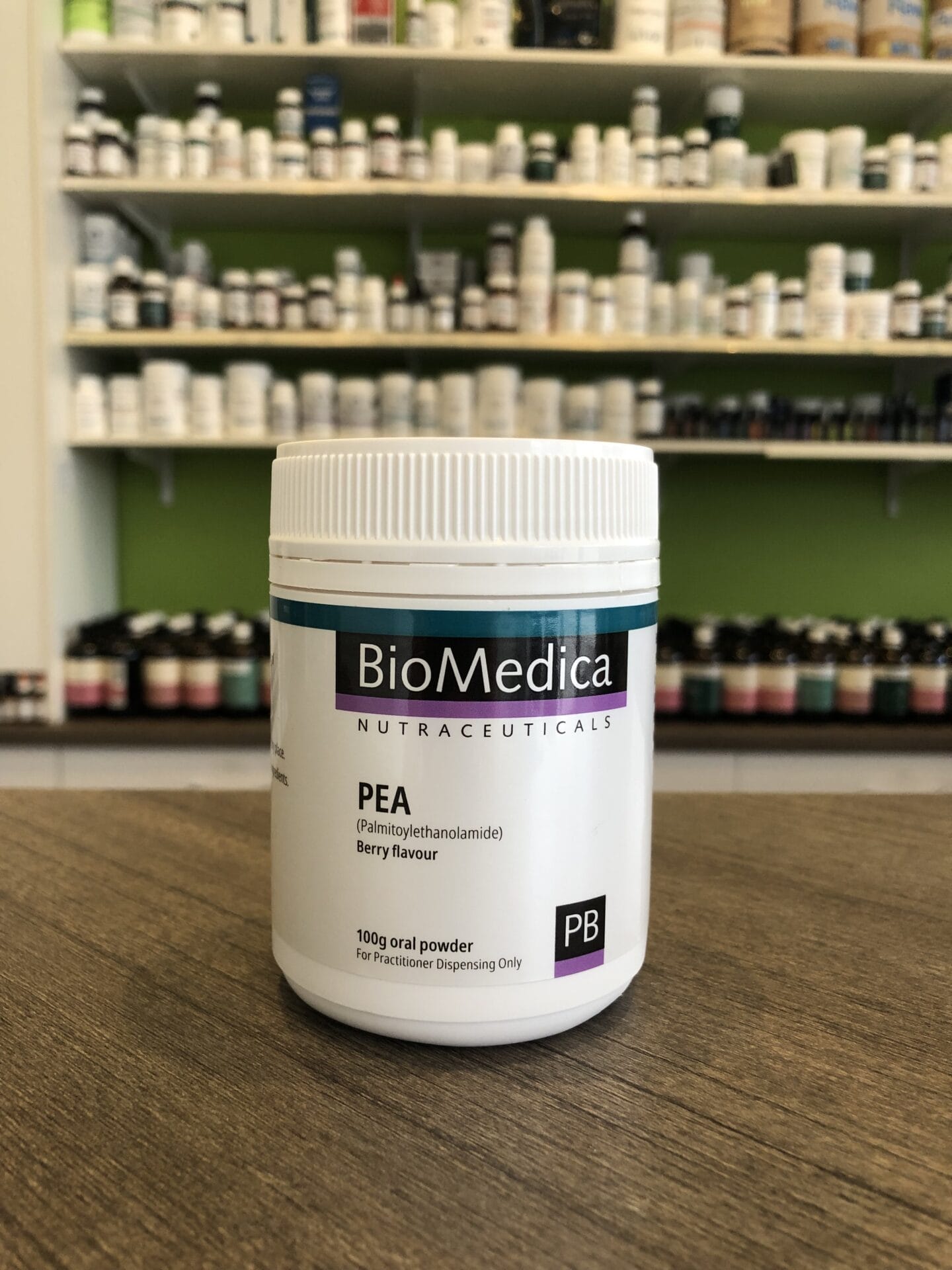
Struggling with persistent pain that just doesn’t seem to shift – no matter what you try?
Chronic inflammation and pain are often signs that the body’s internal regulation systems are out of balance. While many approaches focus on suppressing symptoms, there’s growing interest in compounds that help restore balance at a cellular level.
One of the most promising (yet still under-the-radar) is PEA.
What is PEA?
Palmitoylethanolamide (PEA) is a naturally occurring fatty acid compound produced by your body.
It’s also found in small amounts in foods like egg yolks, peanuts and soybeans—but the levels we produce internally are far more relevant when it comes to healing.
PEA plays a key role in regulating inflammation and protecting the nervous system. It’s part of a group of compounds known as endocannabinoid-like molecules, meaning it works alongside your body’s endocannabinoid system—a critical network involved in pain perception, inflammation, mood and immune function.
How Does PEA Work?
At its core, PEA is about calming an overactive immune and nervous system.
When you experience injury, stress or chronic inflammation, certain immune cells—particularly mast cells and microglia—become overactivated. This drives ongoing inflammation and sensitises pain pathways.
PEA helps regulate this process by:
- Reducing mast cell activation → lowering the release of inflammatory chemicals
- Calming microglial cells in the brain and nervous system → reducing neuroinflammation
- Activating PPAR-α receptors → switching off inflammatory pathways at a genetic level
The result? A shift from a pro-inflammatory, pain-amplifying state to a more balanced, regulated one.
The Link Between Inflammation, Pain & the Nervous System
Chronic pain is rarely just about the site of injury.
Over time, the nervous system can become sensitised—meaning pain signals are amplified, prolonged and sometimes triggered even without clear physical damage.
This is where PEA stands out.
Instead of simply masking pain, it works upstream by:
- Supporting nervous system regulation
- Reducing neuroinflammation
- Helping the body return to a more normal pain threshold
This makes it particularly relevant for conditions where inflammation and nerve sensitivity overlap.
Key Benefits of PEA
1. Reduces Chronic Inflammation
PEA helps downregulate inflammatory pathways without shutting the immune system down completely—supporting a more balanced response rather than blunt suppression.
2. Chronic Pain Relief
Research has shown benefits across a range of pain conditions, including nerve pain, musculoskeletal pain and inflammatory pain. It works by addressing the drivers of pain, not just the symptoms.
3. Calms the Nervous System
By reducing neuroinflammation and supporting endocannabinoid function, PEA can help shift the body out of a chronic “fight or flight” state—an important factor in persistent pain.
4. Supports Recovery & Tissue Healing
Lower inflammation + improved cellular signaling = a more favorable environment for repair and recovery.
5. Well-Tolerated & Safe
PEA has been widely studied and is generally very well tolerated, making it a valuable option for long-term support when used appropriately.
What Conditions Can PEA Help With?
Due to its dual action on inflammation and the nervous system, PEA may be beneficial for:
- Chronic musculoskeletal pain
- Nerve-related pain (neuropathic pain, sciatica)
- Joint inflammation and stiffness
- Headaches and migraines
- Conditions involving neuroinflammation
- General inflammatory load impacting recovery and wellbeing
Why PEA Is Different to Conventional Pain Relief
Most conventional pain medications work by blocking pain signals or suppressing inflammation broadly.
While this can provide short-term relief, it doesn’t always address the underlying drivers—especially when the nervous system is involved.
PEA takes a different approach.
It works by:
- Regulating immune and inflammatory responses
- Supporting the body’s own pain-control systems
- Helping restore balance, rather than forcing suppression
This makes it a powerful adjunct in a holistic, long-term strategy for managing chronic pain.
The Bigger Picture: Supporting the Body Holistically
While PEA can be incredibly effective, it works best when combined with a broader strategy that supports:
- Gut health → influencing systemic inflammation
- Sleep quality → essential for nervous system repair
- Stress regulation → reducing cortisol-driven inflammation
- Movement and circulation → supporting tissue healing
Chronic pain is rarely caused by one single factor – and the most effective approach is always a personalised, multi-layered one.
Is PEA Right for You?
If you’re dealing with ongoing inflammation, persistent pain, or a nervous system that feels constantly “on edge” – PEA may be the missing link.
As always, the key is using the right approach for your body.
Discuss this with your Naturopath at MNHC at your next consultation and discover how PEA could help you move, feel and function at your best again. You don’t have to keep living with chronic pain.