





When it comes to immune health, many people think the goal is simply to boost immunity. However, a healthy immune system is not one that is constantly switched on—it’s one that is balanced, responsive and able to adapt when needed.
This is where medicinal mushrooms stand out.
Used for centuries in traditional medicine systems, medicinal mushrooms contain unique compounds that interact with the immune system and may help influence communication between immune cells and support a balanced immune response.
Rather than simply stimulating immunity, many medicinal mushrooms are considered immunomodulating, meaning they help influence immune activity in ways that support an appropriate response.
What Makes Medicinal Mushrooms Unique?
Medicinal mushrooms contain a variety of naturally occurring compounds, including beta-glucans, polysaccharides, triterpenes and antioxidants, which contribute to their unique biological properties.
One of the most researched compounds is beta-glucans.
Beta-glucans are complex carbohydrates found within the cell walls of fungi. They can interact with specialised receptors on immune cells, influencing immune signalling and activity.
Medicinal mushrooms support the body’s natural defence mechanisms while helping maintain appropriate immune regulation.
How Do Medicinal Mushrooms Support Immune Function?
Supporting Immune Cell Communication
Your immune system relies on constant communication between different types of immune cells. When a potential threat is detected, these cells need to coordinate an appropriate response.
Compounds found in medicinal mushrooms communicate with immune cells such as:
- Macrophages – immune cells involved in identifying and removing foreign substances.
- Natural Killer (NK) cells – specialised immune cells that help identify and eliminate virus-infected or abnormal cells.
- Dendritic cells – immune cells that help coordinate communication between innate and adaptive immunity.
By influencing these pathways, medicinal mushrooms support the communication and coordination required for an effective immune response.
Supporting Appropriate Immune Activity
A stronger immune response is not necessarily a better one. The immune system needs to respond when required, but it also needs mechanisms that help regulate activity and resolve the response afterwards.
This is an important distinction when considering immune health. Rather than constantly pushing immune activity higher, the goal is to support an immune system that can respond appropriately and adapt according to the circumstances.
This immunomodulating potential is one of the reasons medicinal mushrooms have attracted interest in research into immune regulation and overall resilience.
Different Mushrooms, Different Benefits
While many medicinal mushrooms contain common compounds such as beta-glucans, each species has its own combination of polysaccharides, triterpenes, sterols and other bioactive constituents.
These differences give each mushroom its own unique profile and help explain why different species may be selected for different purposes.
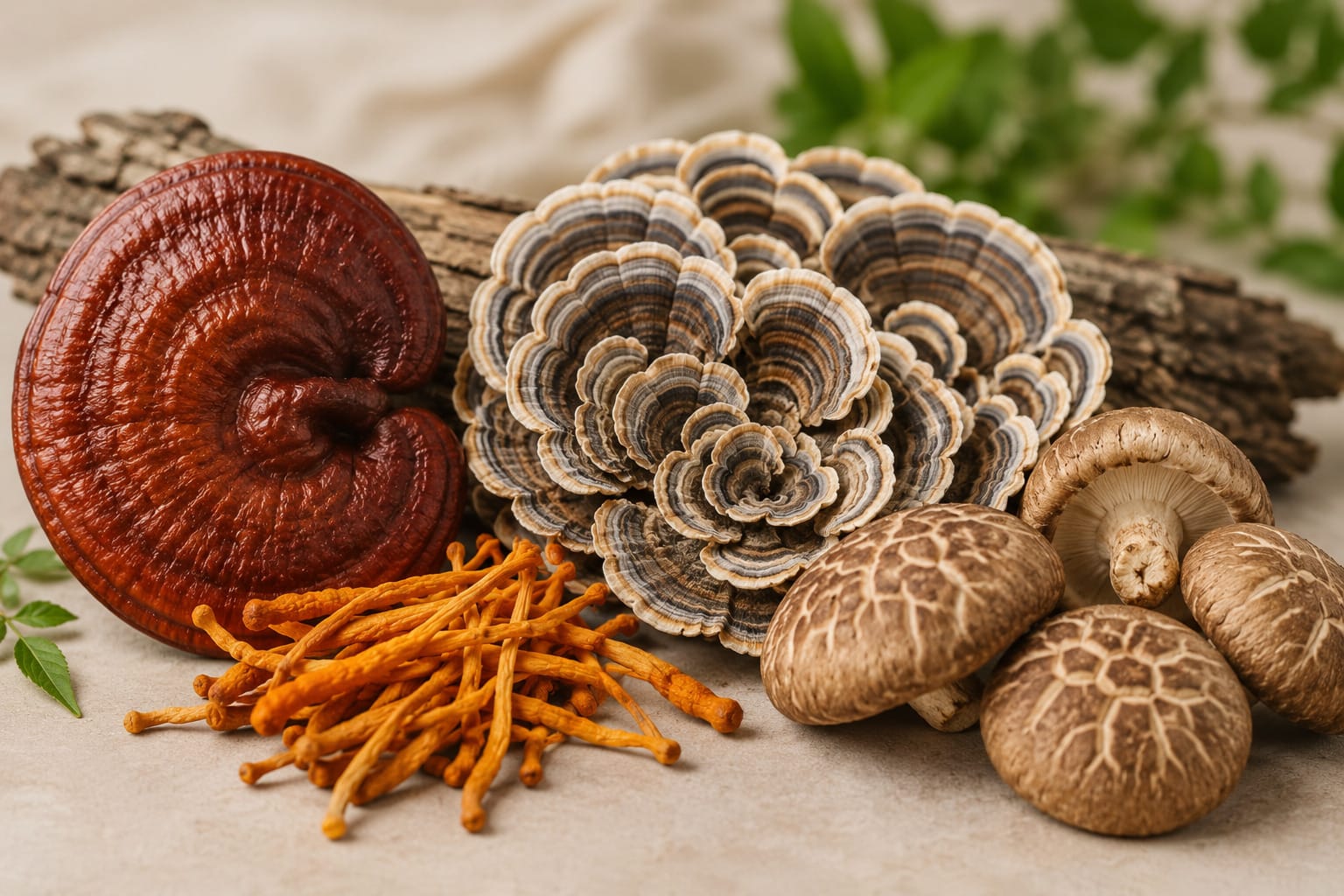
Reishi (Ganoderma lucidum)
Often referred to as the “mushroom of longevity,” Reishi has a long history of use in traditional East Asian medicine and is particularly valued for supporting overall resilience and immune balance.
Reishi contains beta-glucans and other polysaccharides, as well as triterpenes that have been studied for their effects on immune and inflammatory pathways. Its traditional and modern uses extend beyond direct immune support, making it an interesting mushroom when considering the relationship between immune function, stress and whole-body resilience.
This is particularly relevant because the nervous and immune systems are closely connected. Ongoing stress can influence immune signalling and inflammatory activity, making stress management and recovery important parts of maintaining healthy immune function.
Turkey Tail (Trametes versicolor)
Turkey Tail is one of the most extensively researched medicinal mushrooms and is particularly well known for its immune-active polysaccharides, including beta-glucans.
Compounds such as PSP and PSK have been extensively studied for their potential effects on immune function and their interactions with different immune pathways.
Turkey Tail is also of interest for its relationship with gut health. The gastrointestinal tract plays an important role in immune function, and supporting a healthy and diverse intestinal environment can contribute to broader immune resilience.
Shiitake (Lentinula edodes)
Shiitake is perhaps best known as a culinary mushroom, but it also has a long history of traditional medicinal use.
It contains a range of bioactive compounds, including the beta-glucan lentinan, which has been studied for its interactions with immune cells and immune pathways.
Shiitake also highlights the connection between nutrition and immune health. Immune support does not always need to come from concentrated extracts—regular dietary choices can also provide a variety of nutrients and naturally occurring compounds that contribute to healthy immune function.
Cordyceps (Cordyceps militaris)
Cordyceps has traditionally been used to support energy, stamina and physical resilience, giving it a somewhat different profile from mushrooms more commonly associated with immune support.
Modern research has explored compounds found in Cordyceps, including polysaccharides and cordycepin, for their potential effects on immune activity and inflammatory pathways.
Cordyceps is particularly interesting when immune health is considered alongside overall resilience. Physical demands, prolonged stress and inadequate recovery can all influence how the body responds to challenges, making energy and recovery important parts of the bigger picture.
Different Mushrooms, One Broader Approach
Although each medicinal mushroom has its own unique properties, they can influence multiple systems and pathways throughout the body.
For this reason, different mushrooms are sometimes combined in individualised formulas. Rather than simply trying to increase immune activity, the aim is to provide targeted support based on an individual’s needs—helping support appropriate immune communication, resilience and regulation.
Supporting Your Immune System Through the Seasons
Alongside medicinal mushrooms, a resilient immune system is supported by consistent habits, including:
🌱 A nutrient-rich diet
😴 Quality sleep
🏃 Regular movement
🧘 Stress management
🌿 Targeted herbal and nutritional support from our herbal dispensary
These foundations provide the body with the nutrients, energy and recovery it needs to maintain healthy immune function.
Medicinal mushrooms can be one additional tool within this broader approach, particularly when selected according to individual needs.
The Bottom Line
Medicinal mushrooms combine centuries of traditional use with growing scientific evidence.
Their diverse range of bioactive compounds interact with immune pathways, making them an excellent option for supporting immune function and resilience. Importantly, the goal is not always to make the immune system work harder—it is to support an immune response that is appropriate, adaptable and well regulated.
At Malvern Natural Health Care, our naturopaths use herbal medicine and nutritional support as part of an individualised approach, selecting remedies based on your unique health needs and goals.
Contact our clinic by calling 0395723211 or via the website to book in a consultation today.