





When we talk about supporting immunity, the conversation often centers around one idea: boost it.
But a healthy immune system isn’t simply one that responds more strongly.
It needs to know when to respond, how strongly to respond, and when to stand down.
This is where mucosal immunity becomes particularly interesting.
What is mucosal immunity?
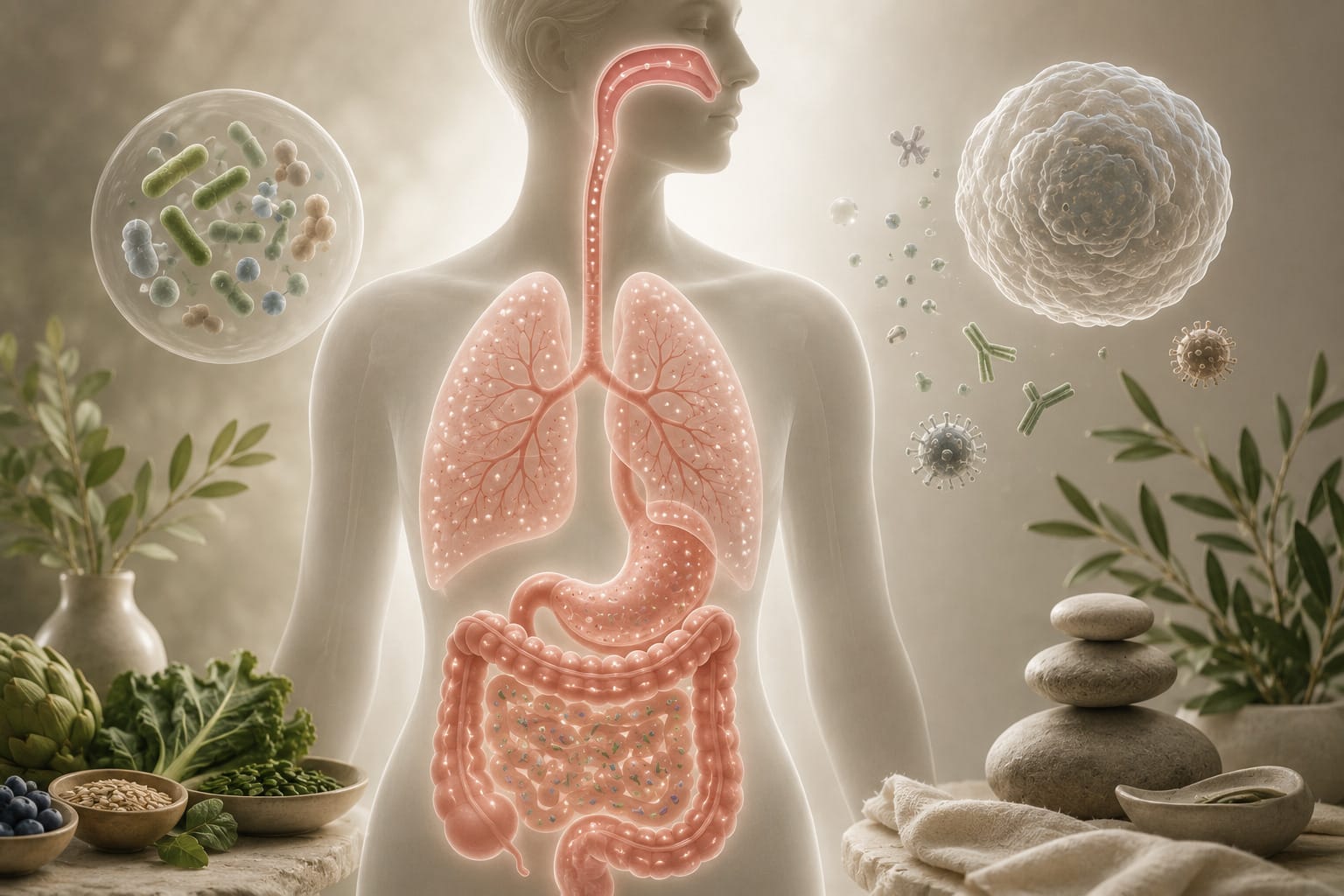
Mucosal immunity refers to the immune system associated with the body’s mucosal surfaces — including the digestive and respiratory tracts.
These surfaces are constantly exposed to the outside world. Every day, your gut encounters food, bacteria, viruses and countless other substances.
The immune system therefore has a challenging job.
It needs to recognise and respond to potential threats, while also tolerating things that aren’t harmful — including food and many of the microorganisms that naturally live in our gut.
It’s not simply about reacting. It’s about tolerance and regulation.
The immune system needs both an accelerator and a brake.
A strong immune response can be essential when there is a genuine threat. But continually mounting an immune response to harmless stimuli isn’t necessarily beneficial. Healthy immune function involves finding the appropriate response for the situation and returning towards a balanced state once that response is no longer needed.
Your gut is a major immune environment
The gut is far more than a digestive system.
It contains a large and highly organised network of immune cells and protective mechanisms, including the intestinal lining, mucus and secretory antibodies such as IgA.
At the same time, the gut is home to trillions of microorganisms that interact continuously with our immune system.
This relationship is fascinating.
Signals from the microbiome can influence immune cells and processes involved in immune tolerance and homeostasis, while the immune system helps shape the environment in which those microbes live.
It’s a constant conversation between the gut, microbiome and immune system.
And maintaining a healthy relationship between these systems is an important part of mucosal immune health.
What does this have to do with immune regulation?
Quite a lot.
The mucosal immune system has to constantly balance defence and tolerance.
This is particularly relevant when we think about immune dysregulation.
In conditions involving inappropriate or excessive immune activity, including autoimmune and inflammatory diseases, researchers are investigating the complex relationships between the intestinal barrier, microbiome, mucosal immune responses and systemic immunity.
But it’s important not to oversimplify this.
There isn’t a single “leaky gut”, microbiome or mucosal immune problem that explains autoimmune disease — and supporting gut health isn’t one simple cure for autoimmune conditions.
The immune system is incredibly complex, and these conditions have multiple contributing factors.
What we can say is that mucosal immune regulation is an important part of overall immune homeostasis, making the gut an interesting and relevant area to consider when looking at immune health.
So, should you be trying to “boost” your immunity?
Not necessarily.
For some people, particularly those experiencing immune dysregulation, the more useful question may be:
How can I support healthy immune regulation?
That means looking beyond simply stimulating immune activity.
It can involve paying attention to the foundations of health — including:
🥦 Nutrition
Providing the essential nutrients your immune system needs to function effectively and regulate its response. This includes a varied, nutrient-dense diet rich in colourful vegetables, quality protein, healthy fats, fibre and key micronutrients such as zinc, vitamin D and vitamin C.
🦠 Gut health
Supporting healthy digestion, the intestinal environment and the relationship between the gut microbiome and immune system. Where appropriate, a GI-MAP Test can help identify gut imbalances and guide a more individualised and targeted approach.
😴 Sleep & recovery
Giving the body sufficient time to repair, recover and regulate. Quality sleep is important for healthy immune function and helps the body respond appropriately to everyday challenges.
🧘 Stress
Managing stress levels and recognising the ongoing communication between the nervous and immune systems. Supporting the body’s stress response can be an important part of maintaining healthy immune regulation.
🏃 Movement
Regular physical activity is another important component of healthy immune function. Movement supports circulation, metabolic health and the body’s natural regulatory processes.
🌿 Individualised Herbal Support
Where appropriate, nutritional and herbal medicine can be incorporated into a personalised treatment plan from one of our Naturopaths. Different herbs and nutrients will be selected based on your individual needs from our herbal dispensary.
Looking at immunity differently
At Malvern Natural Health Care, we don’t see immune health as simply a matter of “boosting” or “strengthening” the immune system.
For some people, particularly those dealing with immune-related or autoimmune conditions, the conversation is more nuanced.
Rather than asking “How can we boost the immune system?”, it’s more beneficial and important to ask:
Is it responding appropriately?
Are the systems that help regulate it being supported?
What individual factors might be influencing immune function?
Sometimes, supporting immunity isn’t about doing more.
It’s about helping create the conditions for the immune system to do its job appropriately and effectively.
Because healthy immunity isn’t just about defence. It’s also about balance.